
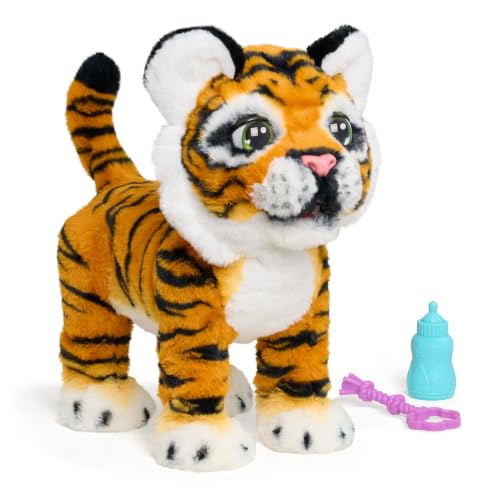
What Makes FurReal Tiger Roar? — Sound & Motion Features Inside Tyler and Other Interactive Models
If you’ve ever pressed your hand to a FurReal tiger’s back and heard it growl in response, you’ve witnessed the blend of sound engineering and motion sensors that define the brand’s interactive plush line. Understanding what makes FurReal tiger roar helps shoppers decide which model fits their needs — whether it’s Tyler’s hundred-plus response combinations or the simpler squeeze-triggered sounds in the white tiger.
This guide unpacks the sensor triggers, audio mechanisms, and motion features behind each roar, rumble, and purr.
Touch Sensors and Pressure Pads
Most FurReal tigers use membrane switches or capacitive sensors embedded along the head, back, and paws. When you stroke Tyler’s forehead or press his back, a piezo sensor registers the contact and sends a signal to the onboard control board.
The piezoelectric sensor converts mechanical pressure into an electrical charge, which the processor interprets as one of several possible triggers. Different zones map to different sounds: a head pat might cue a contented purr, while a back press triggers a louder roar.
Response consistency depends on sensor placement and the foam padding around each zone. If the plush layer is too thick, children may need to press harder to activate the sound, which can frustrate younger users.
Audio Board and Speaker Design
At the heart of every roar is a small audio playback chip — typically a one- or two-megabyte ROM holding compressed WAV or ADPCM files. The chip plays pre-recorded tiger sounds through a 1.5- to 2-inch speaker mounted in the chest cavity.
Amplifier wattage stays low, around 0.5 to 1 watt, to preserve battery life while still delivering clear vocalizations. Hasbro engineers record real tiger vocalizations at zoos, then edit and layer the files to create a range that includes chuffs, growls, and full-throated roars.
The FurReal Roarin’ Tyler Playful Tiger carries over a hundred unique sound combinations, cycling through them based on which sensor fires and how recently the toy was last activated. That variety prevents the repetitive loop fatigue common in earlier electronic plush.
Motion Triggers and Motorized Movement
Beyond static sound, premium models add motorized motion. Tyler’s head turns side to side using a small geared motor, synchronized with his roar to mimic a real tiger scanning its environment.
An accelerometer or tilt switch detects when the toy is picked up or tilted, cueing a surprised growl or a settling purr. These motion inputs layer on top of the touch sensors, creating a more dynamic interaction cycle.
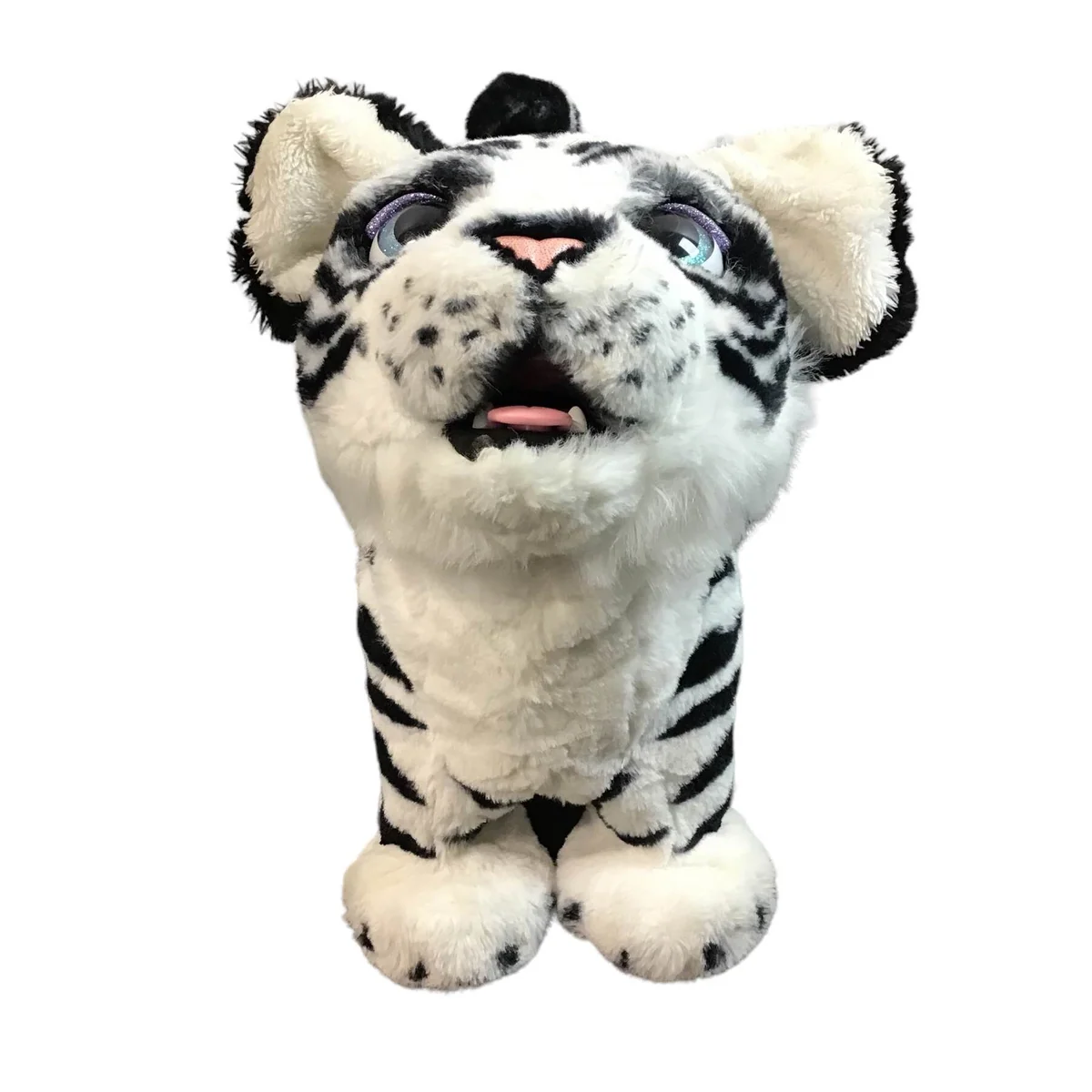
The white tiger variant simplifies the motion suite, relying on squeeze-activated sounds without motorized head movement. That trade-off lowers cost and battery draw, making it a better fit for younger children who may not handle geared mechanisms gently.
Battery Power and Longevity
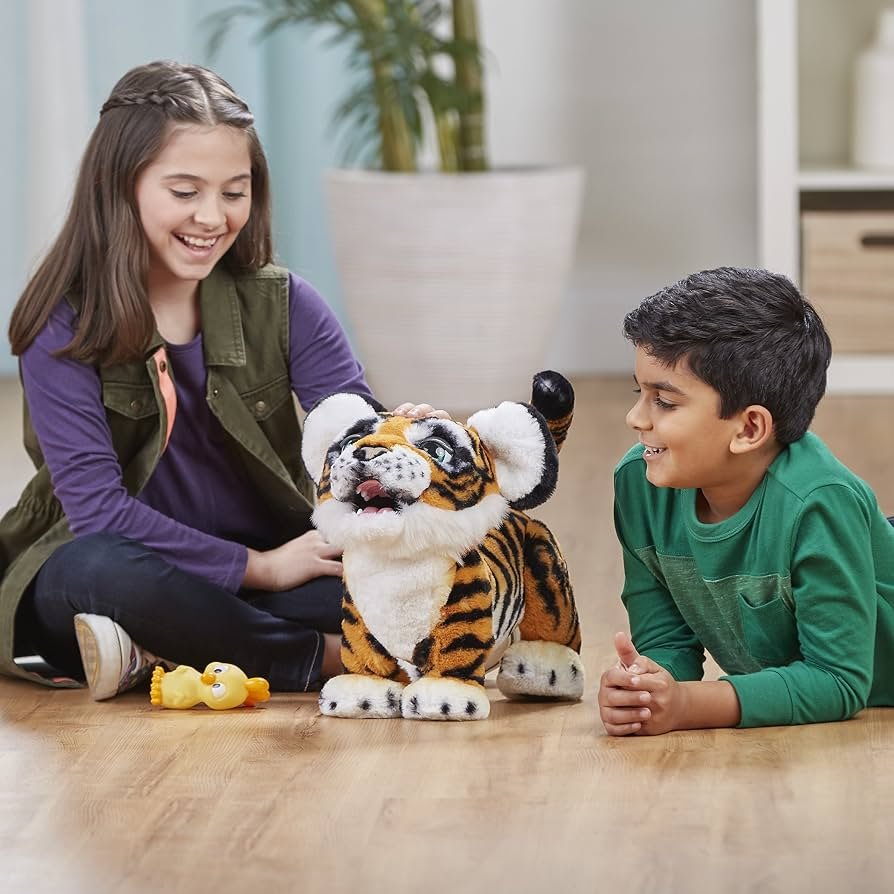
Most FurReal tigers run on three or four AA batteries, which power the audio board, sensors, and motors for roughly 15 to 25 hours of active play. Standby drain is minimal — a sleep mode shuts down the processor after 60 seconds of inactivity.
Users who leave batteries in the toy for months without play may experience corrosion on the terminals, which blocks conductivity and silences the roar. Removing batteries during long storage periods prevents that damage.
Rechargeable NiMH batteries work but deliver slightly lower voltage, which can reduce speaker volume by 10 to 15 percent. Alkaline cells offer the best balance of capacity and output for consistent roar intensity.
Comparing Sound Features Across Models
The original FurReal white tiger offers a single-button sound trigger with three or four pre-set vocalizations, while Tyler’s multi-zone sensor array unlocks dozens of combinations. Shoppers looking for variety lean toward Tyler; those prioritizing simplicity and lower maintenance prefer the white tiger.
Both models share the same core audio-chip architecture, so sound quality — clarity, volume, and realism — remains comparable. The difference lies in interaction depth, not fidelity.
For households juggling multiple interactive pets, battery logistics become a consideration: Tyler’s higher feature set drains cells faster, requiring more frequent replacements or a standing stock of rechargeables.
Choosing the Right Interactive Tiger for Your Household
What makes FurReal tiger roar boils down to sensor placement, audio-chip capacity, and motor integration. Tyler delivers the richest interaction palette, while simpler models trade feature depth for ease of use and lower battery cost.
Before buying, consider how much interaction variety matters and whether the household can manage the battery cadence that comes with motorized movement. Regular care for FurReal pets — cleaning sensors, replacing batteries promptly, and storing the toy in a dry spot — keeps the roar strong for years.
Whether you choose a multi-sensor model or a squeeze-activated white tiger, understanding the mechanics behind each roar helps you set realistic expectations and troubleshoot issues as they arise.
Notes
A pressure sensor under the back fur detects your touch and signals the audio board to play one of several pre-recorded roar files. The sensor converts mechanical pressure into an electrical trigger, which the onboard processor interprets and routes to the speaker.
Yes. Most FurReal tigers use three or four AA batteries housed in a compartment on the belly or back. If the roar cuts out, check for corrosion on the terminals and replace the cells with fresh alkalines.
If new batteries don’t restore sound, a loose wire or failed speaker may require disassembly and soldering.
No. Each model uses different audio files, so Tyler’s roar sounds distinct from the white tiger’s growl. Engineers record and edit real tiger vocalizations, then assign specific files to each product line based on the toy’s intended character and interaction style.
Accidental sensor activation can occur if the toy is jostled or if ambient vibration triggers the pressure pads. Some models also include a tilt switch that fires when the toy is moved, creating the impression of spontaneous sound.
If the behavior is frequent and unintended, check that the battery compartment is secure and that no debris is pressing on the sensors.
Expect 15 to 25 hours of active play on a set of alkaline AAs, depending on how often the motors and speaker are used. Sleep mode extends standby life to several weeks, but leaving batteries in the toy for months without play can lead to terminal corrosion.
No. The audio files are burned into a ROM chip during manufacturing and cannot be edited or replaced without de-soldering the board. Volume is fixed by the amplifier circuit, so there’s no dial or button to lower the roar if it’s too loud for quiet environments.